
Window Coverings
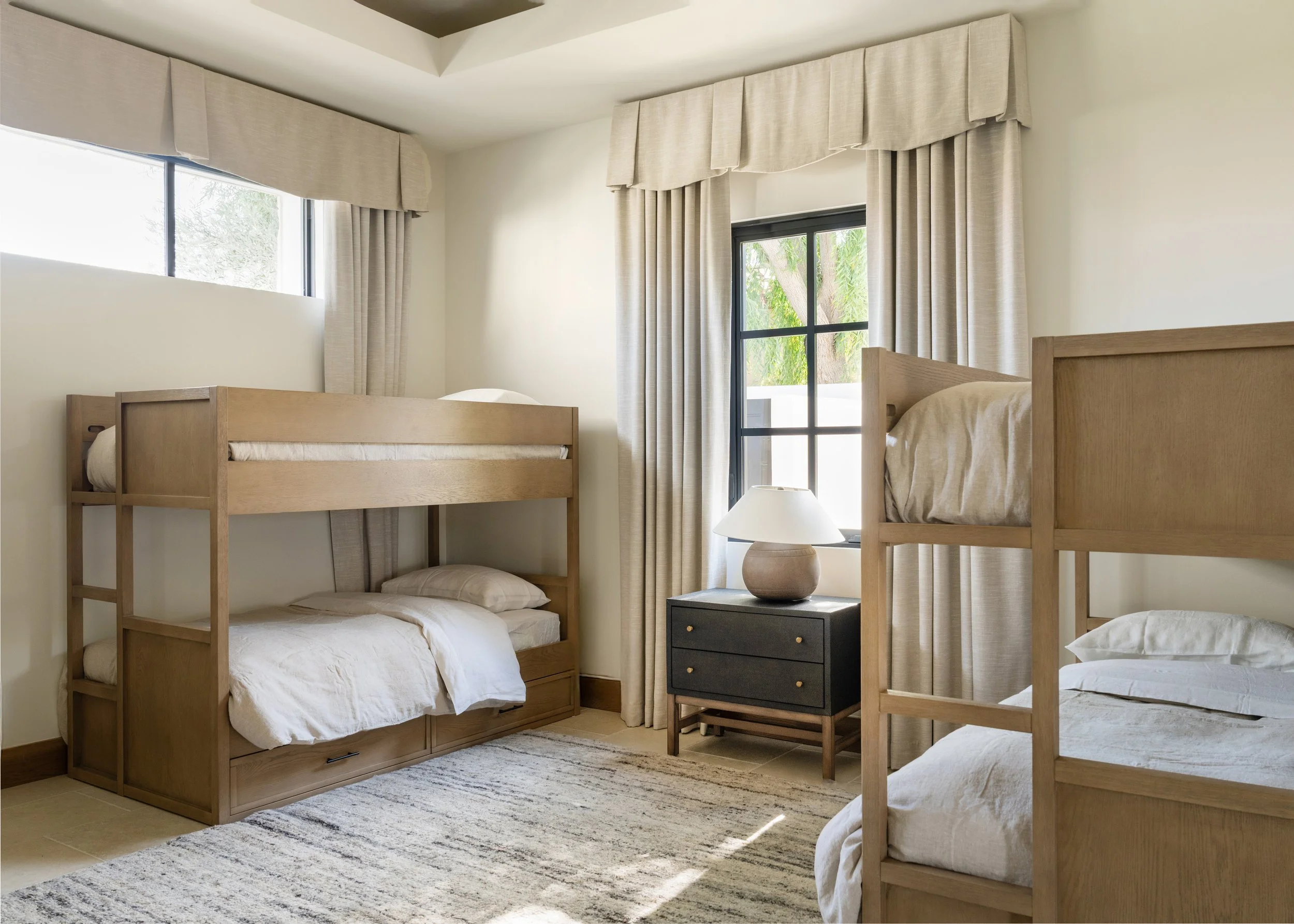
The finishing detail that shapes the light, comfort, and character of a room.
Window treatments are often one of the last decisions in a room, yet they can have a meaningful effect on how the space feels. The right treatment frames a view, filters light, softens acoustics, and adds warmth and texture. Because window coverings occupy a prominent part of a room, choosing the right style, fabric, and proportions can bring the entire space together.
On the Central Coast, where natural light is one of the genuine pleasures of living here, getting window treatments right matters even more. The way morning light filters through a linen panel in a living room overlooking the hills, or the way a roman shade brings a bright kitchen into a calmer register in the afternoon: these details are part of what makes a Central Coast home feel like the place it's supposed to be.
We design custom window treatments as a considered part of the interior, not a box to check at the end. Every selection is made in the context of the specific room: the architecture, the light at different times of day, the materials and palette surrounding the window, the privacy requirements, and the feeling the room needs to have. We work with skilled workrooms and professional installers to bring the design to life correctly, from the first measurement to the final hang.
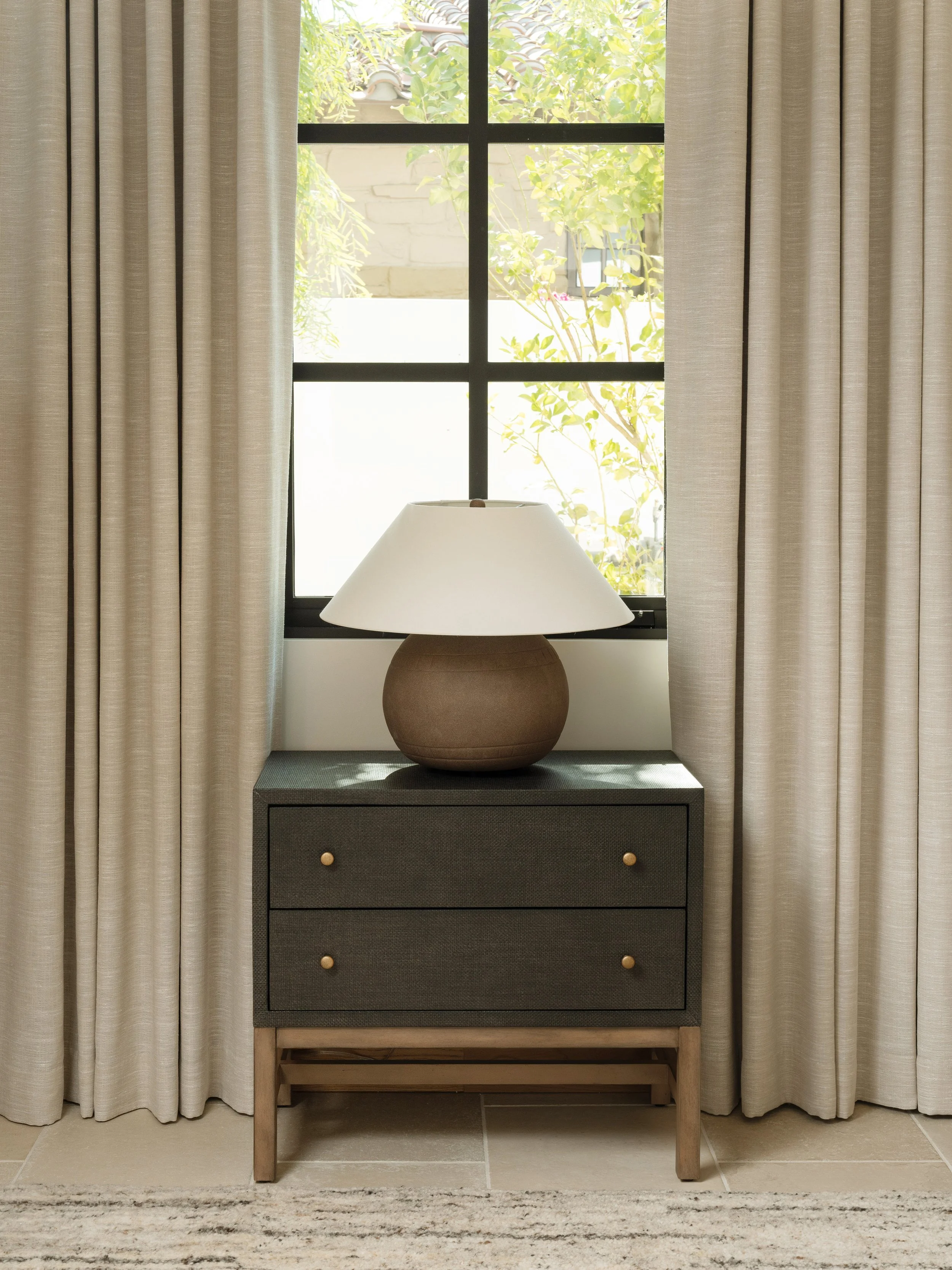
What's Included
Light Study and Functional Assessment Before any fabric or hardware is selected, we assess what each window actually needs. How much light does the room receive and when? Is there a view worth framing or one that's better concealed? What are the privacy requirements during the day and at night? Does the room need blackout, light filtering, or just a soft visual presence? These questions establish the functional parameters that every treatment selection is built around.
Style and Treatment Selection With the functional needs established, we select the appropriate treatment type for each window: drapery panels, roman shades, roller shades, woven woods, cellular shades, shutters, or a layered combination of soft and hard treatments. The decision is driven by the architecture of the window, the design direction of the room, and what the space needs to do. Every window is evaluated on its own terms.
Fabric and Material Selection Choosing fabric for soft window treatments involves several considerations, including weight and drape, pattern scale, opacity, how color reads in different light, durability, cleanability, and how the material will wear over time. We source from quality textile vendors and workrooms, presenting options selected for both their beauty and suitability for the space.
Hardware Design and Selection Rods, brackets, rings, and finials contribute to the overall look of a window treatment. We select hardware in relation to the room's other finishes, the scale of the window and panels, and the quality and function of the system. These details help the finished drapery feel cohesive and work as intended.
Workroom Coordination and Fabrication We work with skilled workrooms whose quality and consistency we trust. We provide detailed specifications that leave nothing to interpretation: fabric, lining, interlining if called for, heading style, pleat type, panel width, finished length. We review everything before production begins and follow through to make sure the order is on track.
Measurement and Installation Coordination Accurate measurements are essential to window treatments that hang and function properly. We coordinate with a professional installer who understands the design intent and can review the installation to help ensure the finished treatments look and perform as planned.
Motorization and Smart Home Integration For clients who want motorized treatments, we specify operating systems appropriate for the treatment type and room conditions, and we coordinate with the relevant trades for any wiring or smart home integration required.
Frequently Asked Questions
-
Ready-made treatments come in standard sizes and a more limited range of fabrics, making them a practical option for straightforward windows. Custom treatments are made for your specific windows, room, and design direction, giving you more flexibility with sizing, fabric, and configuration. When thoughtfully specified and fabricated, they can provide a more tailored fit and a cohesive finish.
-
Yes. We design and coordinate treatments for any number of windows, from a single panel to a whole-home package. Each window gets evaluated on its own terms, even within a cohesive whole-home direction.
-
Yes. We coordinate measurements with a professional installer, manage fabrication through our workroom relationships, and are on-site or available to review the installation. We check that the finished treatments hang correctly and feel right in the room.
-
Soft treatments like drapery panels and roman shades typically run four to eight weeks from order to delivery, depending on the workroom and fabric availability. We communicate lead times clearly at the start and track orders through production so nothing comes as a surprise.
-
It depends on the specific treatment and hardware. Some existing installations can be retrofitted; others can't. If you're interested in motorization, specifying it from the start is almost always the more reliable approach. We can evaluate your existing situation and give you an honest read.
-
We source from our trade vendors, which gives us access to quality and selection that isn't available at retail. If you have a fabric you love, we're happy to evaluate it and use it where it's appropriate for the application. We'll let you know if a material may not perform as well as you'd like.
-
Design fees are billed at $200 per hour, with hours varying based on the number of windows and the complexity of the treatments. For a whole home, window treatment projects can start around $40,000, with the total investment depending on the types of treatments, fabric selections, motorization, and other details. Fabrication, hardware, and installation are quoted separately and paid directly to the relevant vendors. We'll provide honest estimates for both design fees and anticipated project costs before you commit.
-
Honeycomb Home Design provides custom window treatment design throughout San Luis Obispo County and California's Central Coast, including Arroyo Grande, Pismo Beach, San Luis Obispo, Shell Beach, Avila Beach, Grover Beach, Oceano, Nipomo, Paso Robles, Templeton, Atascadero, Morro Bay, Los Osos, Cambria, and the Santa Barbara area. Services include treatment style selection, fabric and material sourcing, hardware design, workroom coordination, measurement, installation coordination, and motorization specification for drapery panels, roman shades, roller shades, woven woods, cellular shades, and layered systems throughout the home.